In recent years, Japan has attracted growing interest from people around the world.
Japanese culture, in particular, has captured the imagination of people of all ages and backgrounds, inspiring a wide range of interests and curiosity.
Through this series, “Japanese Culture,” we will introduce various aspects of Japanese culture that people around the world may find fascinating and worth exploring.
If there are any particular topics you would like to learn more about, I would be delighted to hear your suggestions.
Coming Soon: Japanese Cuisine (Washoku), Kabuki, Sumo Wrestling, Ninja, and more.
1. What Is Shichi-Go-San?
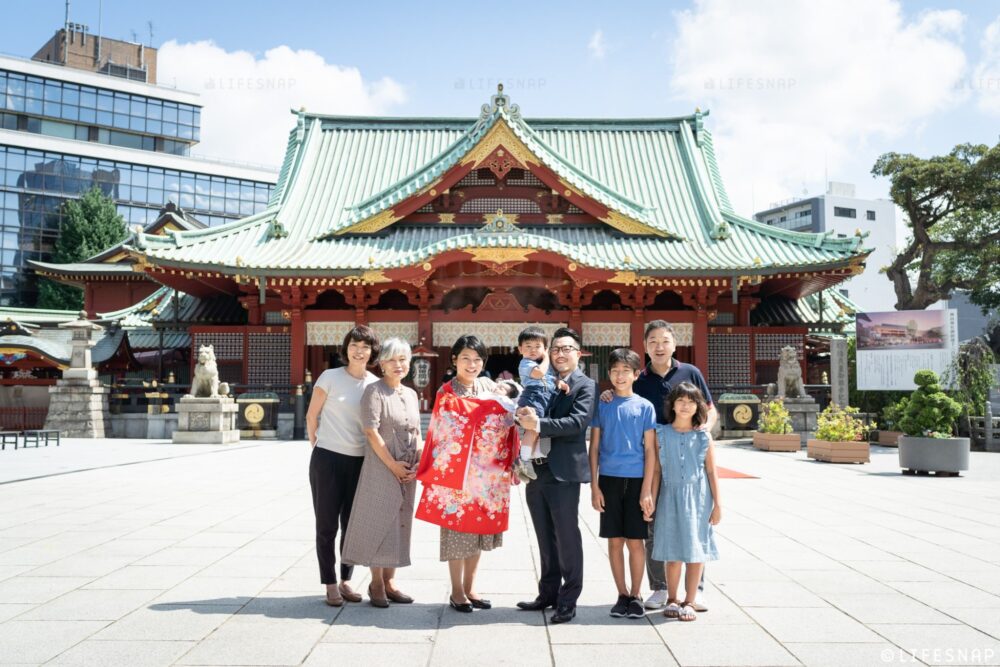
Meiji Jingu Shrine in Tokyo is famous for its Shichi-Go-San celebrations.
Shichi-Go-San (七五三), literally meaning “Seven-Five-Three,” is a traditional Japanese celebration held for children when they reach the ages of three, five, and seven.
It is an occasion for parents and grandparents to express their gratitude for the healthy growth of their children and to pray for their continued health, happiness, and prosperity.
Every year, around November 15, families across Japan dress their children in beautiful traditional clothing and visit Shinto shrines. Some families also visit Buddhist temples.
Although November 15 is the traditional date, many families choose a convenient weekend or another day in October or November.
Shichi-Go-San is not simply a children’s festival. It is an important family occasion that reflects the Japanese appreciation of childhood, family bonds, and the importance of growing up in good health.
2. The Historical Origins of Shichi-Go-San
The origins of Shichi-Go-San can be traced back to several traditional ceremonies practiced among the Japanese aristocracy during the Heian period (794–1185).
In those days, medical knowledge and healthcare were far less advanced than they are today. Infant and child mortality rates were high, and it was by no means guaranteed that children would survive their early years.
For this reason, reaching the ages of three, five, and seven was considered a particularly important milestone.
Parents and families regarded the healthy growth of their children as a blessing and offered prayers to the gods for their continued protection.
Originally, Shichi-Go-San was not a single festival. It developed from three separate ceremonies, each marking an important stage in a child’s development.
These ceremonies were known as Kamioki, Hakamagi, and Obitoki.
3. Three Ceremonies Marking Important Stages of Childhood
3-1. Kamioki: The Ceremony at Age Three
source; kimono-renta-rie
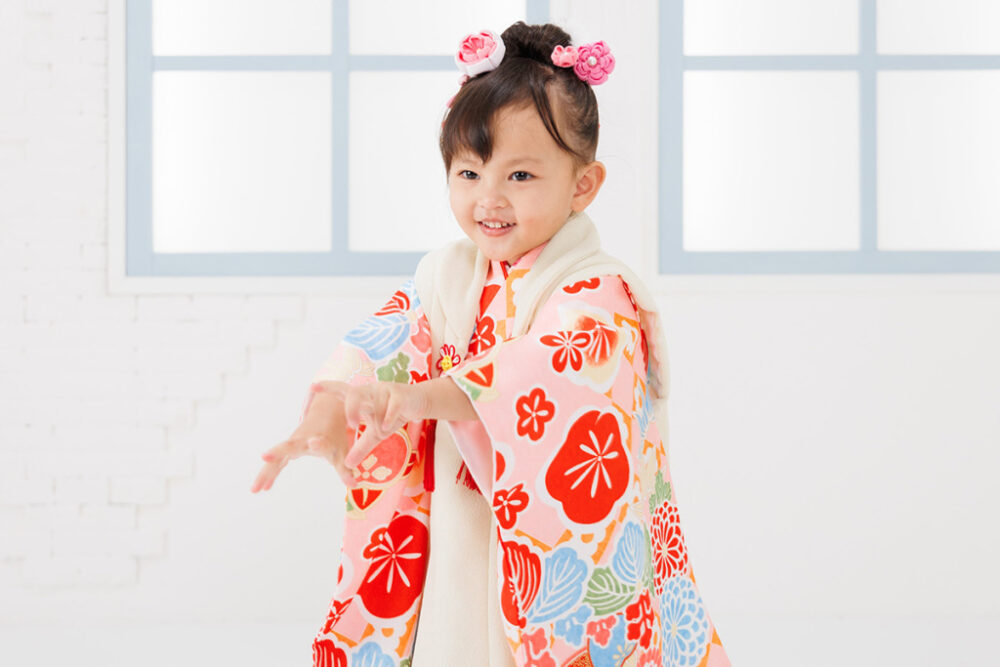
In traditional Japan, it was customary in some families to shave or keep the hair of young children very short during their infancy.
When children reached the age of three, they were allowed to begin growing their hair. This ceremony was called Kamioki, literally meaning “placing the hair.”
It symbolized the transition from infancy to early childhood.
The ceremony was originally performed for both boys and girls.
3-2. Hakamagi: The Ceremony at Age Five
source; rakan-studio
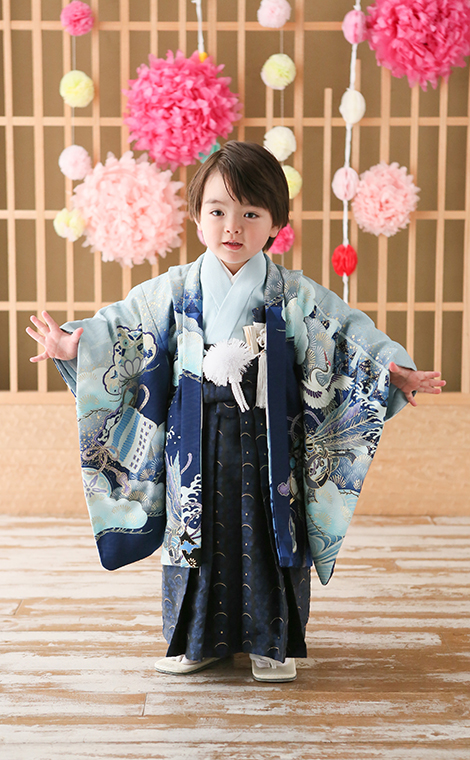
Hakamagi was a ceremony in which a boy wore Hakama for the first time.
Hakama are traditional Japanese formal trousers, worn over a kimono. They have long been associated with formal occasions and traditional Japanese dress.
Putting on Hakama symbolized a child’s growing maturity and the transition toward becoming a young boy.
Although the custom had variations in earlier periods, it gradually became associated mainly with five-year-old boys.
3-3. Obitoki: The Ceremony at Age Seven
source; takatsu photo studio
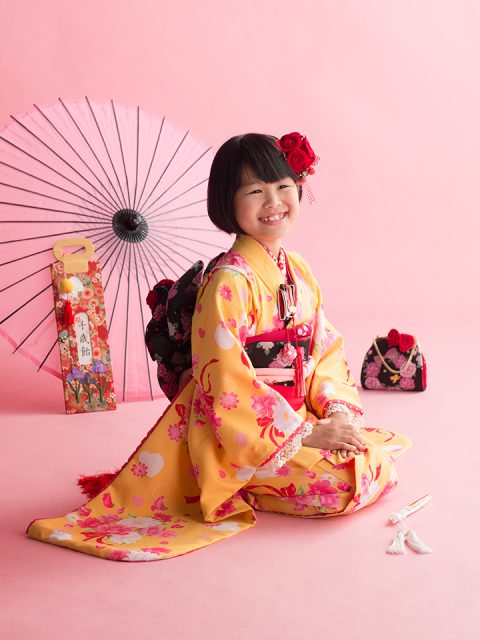
Obitoki was traditionally a ceremony for seven-year-old girls.
Until this age, girls often wore children’s kimono secured with simple cords. At seven, they began wearing an adult-style Obi, a wide decorative sash used to fasten a kimono.
This marked an important step toward growing up and wearing more formal traditional clothing.
These three ceremonies gradually developed into the unified celebration that is now known as Shichi-Go-San.
4. How Shichi-Go-San Became a Popular National Tradition
During the medieval period, these ceremonies were practiced mainly among aristocratic and samurai families.
During the Edo period (1603–1868), however, the customs gradually spread to wealthy merchants and ordinary townspeople.
One well-known historical tradition associates November 15 with Tokugawa Tsunayoshi, the fifth shogun of the Tokugawa government. According to this account, he held a special celebration and prayed for the healthy growth of his son, Tokumatsu, on November 15, 1681.
This story is often mentioned in connection with the development of Shichi-Go-San, although it should be understood as one traditional explanation rather than the sole established origin of the festival.
By the Meiji period (1868–1912), the custom had become increasingly widespread, and it gradually developed into the nationwide family celebration we know today.
5. Why November 15?
November 15 has traditionally been regarded as an auspicious day for celebrating Shichi-Go-San.
There are several explanations for the choice of this date, including traditional calendar beliefs and the association with the historical story of Tokugawa Tsunayoshi.
Today, however, families are not required to visit a shrine on November 15 itself.
Many choose a weekend in October or November when parents and grandparents can gather together.
The important thing is not the exact date, but the family’s gratitude for the child’s healthy growth and its prayers for the future.
6. Traditional Clothing Worn by Children
source; studio mario
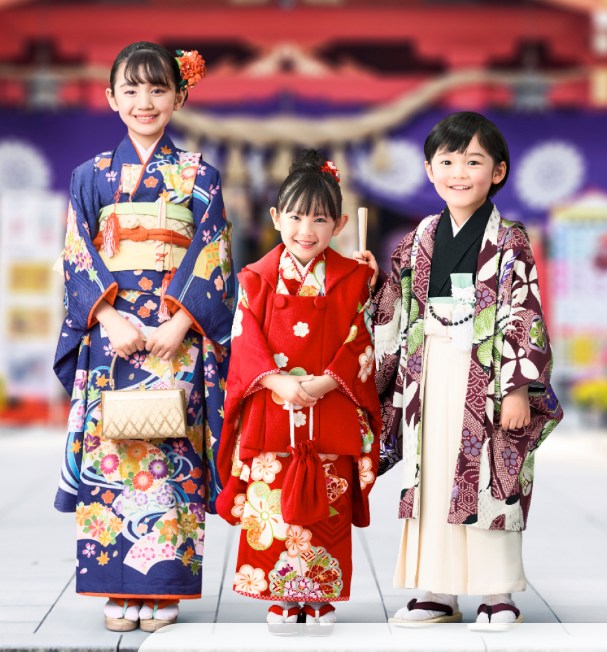
One of the most attractive features of Shichi-Go-San is the beautiful traditional clothing worn by the children.
Girls usually wear colorful kimono decorated with flowers, cranes, or other auspicious patterns. Their outfits are often complemented by an elaborate Obi sash.
Boys traditionally wear a kimono with a Haori jacket and Hakama trousers.
The colors and designs are often chosen to express wishes for happiness, good fortune, and longevity.
In modern Japan, some families choose Western-style dresses and suits instead of traditional Japanese clothing.
For many families, dressing their children in kimono is a particularly memorable part of the celebration.
7. Chitose Ame: Candy Symbolizing a Long Life
source; honey & crunch
source; eitaro sohonpo
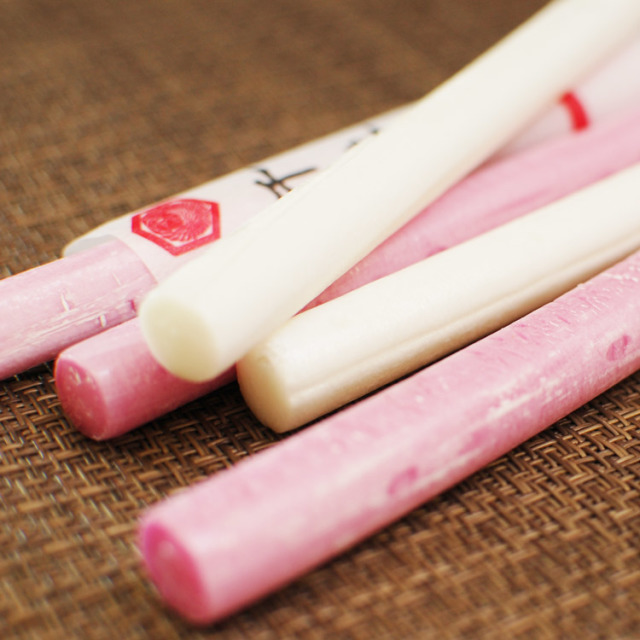
Another important feature of Shichi-Go-San is a special candy called Chitose Ame.
The Japanese word Chitose means “one thousand years,” while Ame means “candy.”
Chitose Ame is a long, thin candy, traditionally made in red and white, two colors associated with celebration and good fortune in Japan.
Its elongated shape symbolizes the parents’ wish that their children will enjoy a long, healthy, and happy life.
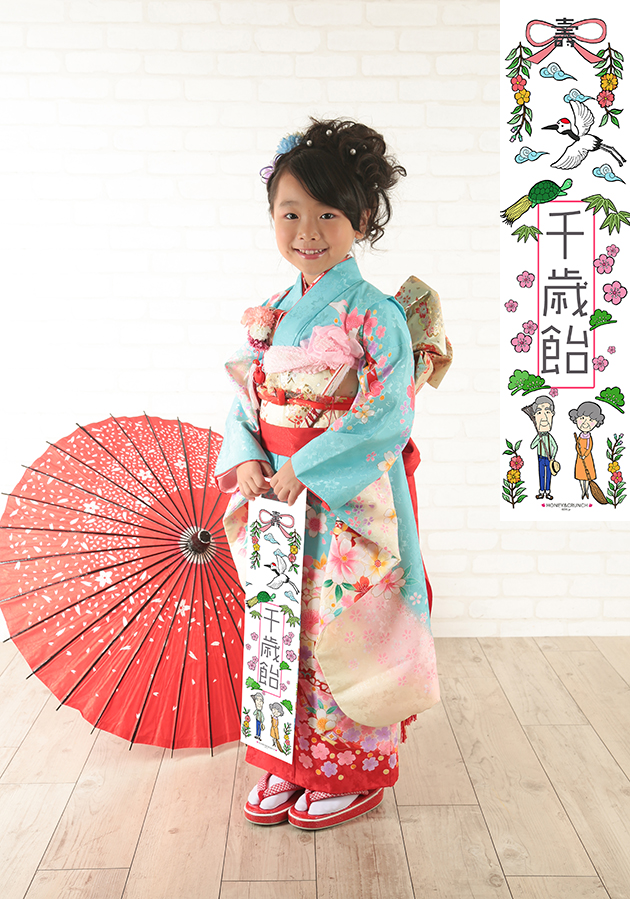
The candy is usually placed in a decorative paper bag featuring traditional symbols such as cranes, turtles, pine trees, bamboo, and plum blossoms.
In Japanese culture, cranes and turtles are particularly well-known symbols of longevity. Pine, bamboo, and plum blossoms are also associated with resilience, good fortune, and prosperity.
Children are delighted to receive this special candy, which has become an essential part of the Shichi-Go-San celebration.
8. Visiting a Shinto Shrine
On the day of Shichi-Go-San, families visit a Shinto shrine to express their gratitude and offer prayers for their children’s future.
Shinto is one of Japan’s traditional religions and is closely connected with the worship of Kami, or sacred spirits and deities associated with nature, places, ancestors, and various aspects of life.
Many families visit their local shrine, where the guardian deity of the community is enshrined.
Some families simply offer prayers at the shrine, while others arrange a formal blessing ceremony conducted by a Shinto priest.
During the ceremony, the priest offers prayers for the children’s health, safety, and happiness.
The visit is not only a religious occasion but also an opportunity for the entire family to celebrate an important stage in the child’s life.
9. Shichi-Go-San in Modern Japan
Today, Shichi-Go-San remains a popular family tradition throughout Japan.
In addition to visiting a shrine, many families arrange professional photographs of their children wearing traditional clothing.
Specialized photography studios offer kimono rentals, dressing services, hairstyling, and commemorative photo sessions.
Grandparents often join the celebration, and families sometimes enjoy a special meal together afterward.
Traditionally, children celebrated Shichi-Go-San according to the Japanese system of counting age, known as Kazoe-doshi. Under this system, a child was considered one year old at birth and became a year older at the beginning of each traditional New Year.
Nowadays, most families use the internationally familiar system of counting age from the date of birth, known as Man-nenrei.
Therefore, some families celebrate when their children reach their actual third, fifth, and seventh birthdays, while others follow the traditional age-counting system.
In general, boys celebrate at ages three and five, while girls celebrate at ages three and seven. However, customs vary depending on the region and individual family preferences.
10. The Meaning of Shichi-Go-San: A Celebration of Family Love
Shichi-Go-San is much more than an occasion for children to wear beautiful kimono and receive special candy.
Historically, it developed from a deep appreciation of the preciousness of childhood at a time when many children did not survive their early years.
For Japanese parents, seeing their children grow up healthy has always been one of life’s greatest joys.
The celebration expresses gratitude for the past and hope for the future. It also brings together parents, grandparents, and other family members to share their happiness.
Even though Japanese society has changed considerably over the centuries, the feelings behind Shichi-Go-San have remained essentially the same.
It is a beautiful expression of parental love, family bonds, gratitude, and the wish for the next generation to enjoy a long and happy life.
In this sense, Shichi-Go-San offers a wonderful insight into the traditional Japanese way of appreciating family and the preciousness of human life.